Alley Garden Font: A Web Designer’s Review
I was recently working on a landing page for a boutique coaching brand that needed to feel approachable yet polished. The client wanted to move away from the sterile, corporate aesthetic common in the industry and inject some warmth into their digital presence. I pulled up Alley Garden from Script Amp, curious to see how its handcrafted charm would translate from a static mockup to a live, responsive web environment. What I found was a typeface that bridges the gap between organic personality and modern digital clarity better than most display fonts I have tested recently.
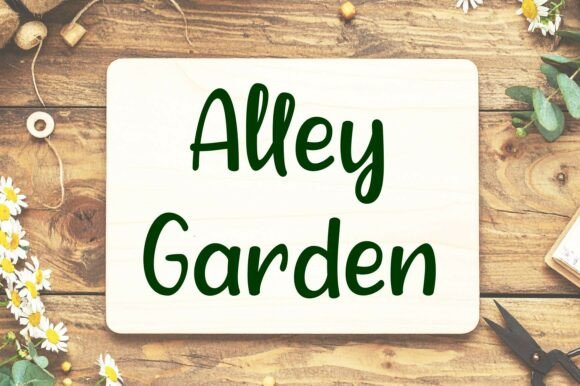
Alley Garden is not just another decorative script; it is a versatile font that blends playfulness with a clean, modern aesthetic. For web designers and UI creators, the challenge with handwritten or script-style fonts is almost always legibility at smaller sizes or on mobile devices. Alley Garden manages to retain its distinctive, organic texture without sacrificing the clean lines necessary for effective screen reading. It feels human, which is exactly what many digital brands are craving right now.
Bringing Warmth to Digital Hero Sections
The first place I tested Alley Garden was in the hero section of the landing page. This is prime real estate where typography needs to do heavy lifting immediately. I set the main headline in Alley Garden, pairing it with a neutral, geometric sans serif for the subheading. The contrast was instant and effective. The font’s slight irregularities and handcrafted feel added a layer of authenticity that standard system fonts simply cannot replicate.
When designing for the web, we often worry about load times and rendering issues. Alley Garden performed smoothly as a webfont, maintaining its integrity across different browsers. The strokes are balanced enough that they do not appear too thin or disappear on high-resolution retina displays, nor do they look overly bold and clunky on standard screens. This balance makes it an excellent choice for hero titles, section headings, and short, impactful phrases that need to capture attention without overwhelming the user interface.
I also experimented with using Alley Garden for overlay text on image banners. Because the font has a distinct character but remains relatively clean, it held up well against busy photographic backgrounds, provided there was sufficient contrast. A subtle drop shadow or a semi-transparent overlay helped the letters pop, ensuring that the playful nature of the typeface did not get lost in the visual noise of the background image.
Readability and Responsive Layout Considerations
One of the most critical aspects of choosing a creative font for web design is understanding its limits. While Alley Garden is highly legible for a display font, it is not designed for body copy. I made sure to restrict its use to headlines, pull quotes, and decorative accents. For the main content areas, I paired it with a clean, readable sans serif font. This combination created a clear visual hierarchy, guiding the user’s eye naturally from the engaging headline down to the informative text.
On mobile devices, the test was even more rigorous. I resized the viewport to simulate various smartphone screens. At larger sizes, Alley Garden shines, showcasing its organic curves and charming details. However, when scaled down for smaller mobile headers, I had to be mindful of letter spacing. Increasing the tracking slightly helped maintain clarity, preventing the characters from merging together on smaller screens. This is a common adjustment for any script or handwritten font, but Alley Garden required less tweaking than many others in its category.
It is important to note that this font is not suitable for dense information blocks, form labels, or navigation menus where quick scanning is essential. Using it for small UI elements could frustrate users and harm accessibility. Instead, treat Alley Garden as a premium accent in your design toolkit. Use it to highlight key value propositions, introduce new sections, or add a touch of personality to call-to-action areas where you want to create an emotional connection before the click.
Building a Cohesive Brand Identity Online
Beyond individual pages, I considered how Alley Garden fits into a broader brand identity. For online stores, course creators, and portfolio sites, consistency is key. I used the font for digital ads and social media graphics to ensure that the brand’s voice remained consistent from the ad click through to the landing page. This continuity builds trust and recognition. When a user sees the same distinctive typography in an Instagram story and then on the website header, it reinforces the brand’s professional yet approachable image.
The font’s versatility allows it to adapt to various digital contexts. I imagined it working beautifully for a wedding planner’s portfolio, where elegance and personal touch are paramount, or for a handmade goods store where the artisanal quality of the products needs to be reflected in the site’s design. In each case, Alley Garden adds a layer of sophistication that feels curated rather than generic.
For those building a complete digital brand kit, pairing Alley Garden with a simple serif font can create a more editorial, magazine-like feel for blog headers or featured articles. Alternatively, sticking with a modern sans serif keeps the look contemporary and clean. The choice depends on the specific mood you wish to convey, but Alley Garden is flexible enough to support both directions.
Licensing and Technical Implementation
Before implementing any new typeface on a client project, it is crucial to check the licensing terms. Alley Garden comes with commercial font licensing options, which is essential for web designers who build sites for paying clients or for entrepreneurs selling digital products. Ensure you have the correct webfont license if you are hosting the files on your server or using a service like Adobe Fonts or Google Fonts, depending on availability.
Also, check for included styles and alternates. Some versions of creative fonts offer swashes or ligatures that can add extra flair to logos or special headings. While these features might not be necessary for every web project, having them available gives you more control over the final look. Always test the font in your specific development environment to ensure it loads correctly and does not cause layout shifts, which can negatively impact user experience and SEO rankings.
In conclusion, Alley Garden is a standout choice for web designers looking to infuse warmth and personality into their digital projects. It strikes a rare balance between artistic charm and functional clarity, making it a reliable tool for creating engaging, human-centered web experiences. Whether you are designing a landing page for a new product launch or refreshing the look of an established online brand, this font offers the modern typography edge needed to stand out in a crowded digital landscape.